

Recommended Texts & Manuals
Functional Fitness Trainer Certification
Functional Fitness Trainer Certification
Earn your Functional Fitness Trainer Certification and design practical movement programs that build strength, mobility, balance and everyday performance.
Pay Only If You Pass
Fully Accredited
100% Online & Self-Paced
No Required Coursework
Instant Digital Certificate
100,000+ Certifications Issued Worldwide
Couldn't load pickup availability
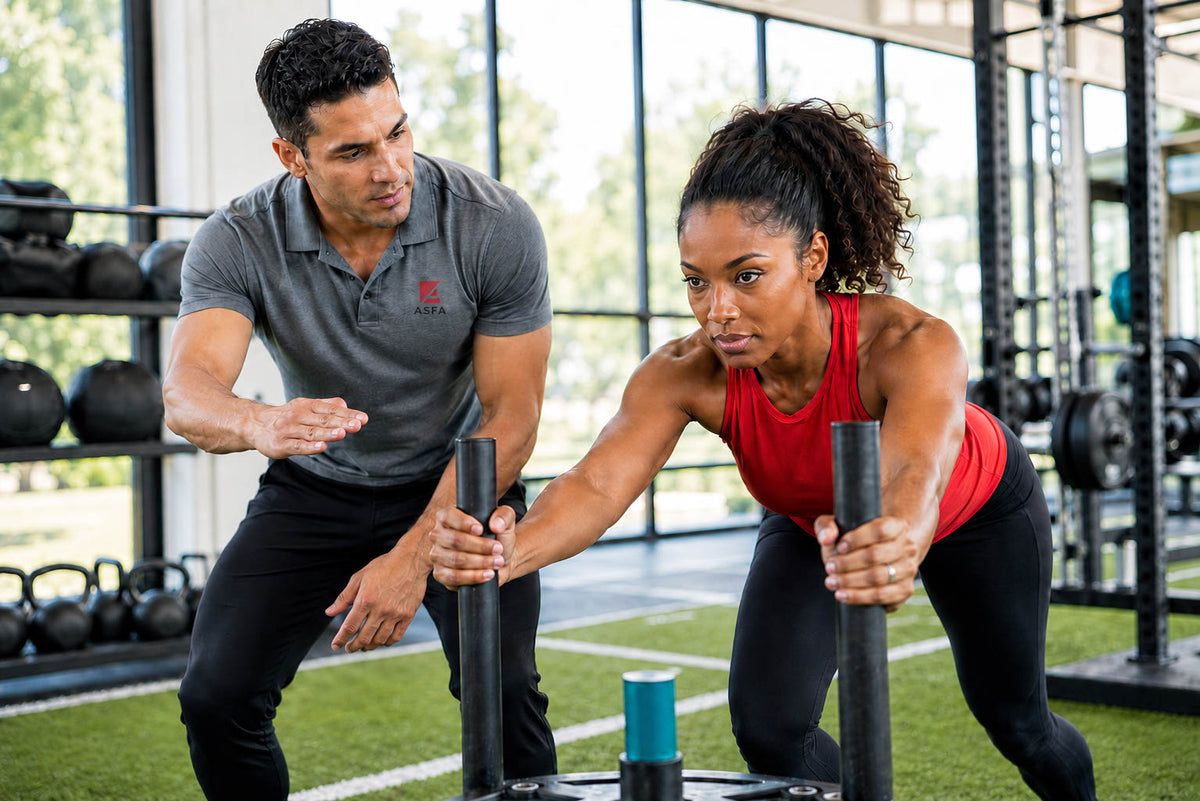
About Our Functional Fitness Trainer Certification
Fitness Matters Most When It Carries Into Real Life
A client may want to lift more weight, but they may also want to move through the day with greater confidence. They may care about getting off the floor, carrying groceries, climbing stairs, playing a sport, working without fatigue, or keeping up with family. Functional fitness connects training to those practical demands.
ASFA’s Functional Fitness Trainer Certification recognizes knowledge of movement-based programming, strength, balance, mobility, coordination, and exercise progression. It is relevant to personal trainers, group instructors, coaches, wellness professionals, and knowledgeable fitness enthusiasts who understand how to make training useful beyond the gym.
You can take the online examination before paying. Pass, and you decide whether to purchase the credential. Do not pass, and you are not charged. Continue studying and return when you are prepared.
What Is a Functional Fitness Certification?
A Functional Fitness Certification is a professional credential that validates knowledge of exercise designed to improve meaningful movement and physical capacity. Functional training commonly uses patterns such as squatting, hinging, pushing, pulling, carrying, rotating, balancing, and locomotion while adapting the program to the client’s goals and abilities.
“Functional” does not mean complicated, unstable, or theatrical. An exercise is functional when it serves a useful purpose for the person performing it. A basic squat may be highly functional. A difficult balance drill may not be, depending on the client and the goal.
Start With the Person, Not the Exercise
The same movement can be appropriate for one client and unnecessary for another. Functional programming begins by asking what the client needs to do, what they can do now, and which limitations are relevant to the goal.
From there, the trainer selects movements and loading strategies that can be coached, progressed, and repeated consistently. The program may include strength, mobility, balance, conditioning, or coordination, but those elements should not be added simply to make the session look varied.
Purpose is the filter. Every exercise should earn its place.
Movement Patterns and Coaching Decisions
- Squat and sit-to-stand patterns: developing lower-body strength and control for training and everyday movement.
- Hinge patterns: organizing hip-dominant movement and posterior-chain training appropriately.
- Push and pull patterns: balancing upper-body movement and selecting positions that fit the client.
- Carrying and bracing: applying whole-body tension, posture, grip, and locomotion in practical ways.
- Rotation and anti-rotation: understanding when the trunk should create, control, or resist movement.
- Balance and coordination: choosing challenges that are relevant, scalable, and appropriate to the participant.
- Mobility and stability: recognizing that useful movement requires enough range and enough control for the task.
- Program progression: changing load, range, complexity, tempo, volume, or environment without losing the training objective.
- Coaching and modification: explaining movement clearly and adapting it when the original version is not the best fit.
The examination evaluates these concepts as part of an integrated approach to training, not as a checklist of trendy exercises.
Functional Training Is Not Rehabilitation
Fitness professionals can coach movement and exercise within their qualifications. They should not diagnose pain, treat injuries, or present a fitness program as a replacement for care from a licensed healthcare professional.
This distinction protects both the client and the trainer. A functional fitness program may support general strength, movement confidence, balance, or physical preparedness, but it must remain within an appropriate fitness scope. When a client’s symptoms, condition, or recovery needs exceed that scope, referral is part of professional judgment.
Useful Across Different Client Populations
Functional fitness is not limited to one age group or training level. An athlete may use it to support movement quality and physical preparation. An office worker may need strength and mobility that transfer to daily life. An older adult may value balance, getting up and down, and maintaining independence. A beginner may simply need a program that builds confidence with foundational patterns.
The principles remain consistent, but the application changes. That adaptability makes functional fitness a useful specialty for trainers who work with varied clients.
Knowledgeable fitness enthusiasts can also pursue the certification before entering the profession. Experience helps, but preparedness is the requirement ASFA tests.
A Direct Route for Candidates Who Already Know the Material
Some people need a structured course to learn functional training from the beginning. Others have studied movement, coaching, anatomy, and exercise programming through personal training, sport, formal education, or independent work.
ASFA does not require both groups to make the same upfront purchase. Recommended resources are available, but coursework is optional. Take the examination when you feel ready. If you pass, you can purchase the certification. If you do not pass, you are not charged and can prepare further.
The test-first model lets you evaluate your knowledge and the credential before committing financially.
Professional Application and Marketability
A Functional Fitness Trainer Certification can support personal training, small-group coaching, wellness programs, general physical preparation, and movement-focused fitness services. It can also complement specialties such as senior fitness, balance training, core fitness, stretching, or strength and conditioning.
The credential does not guarantee clients, employment, or increased rates. It can, however, make a relevant specialty easier to communicate. Prospective clients are more likely to understand a service when the trainer can explain what functional fitness means, who it serves, and how it connects to practical goals.
Employer requirements vary. Verify the certification standards of a specific gym, studio, program, or insurer before purchasing if acceptance is essential.
Accreditation and Certification Maintenance
ASFA is fully accredited by the International Council for Online Educational Standards (ICOES). It is completed online and on your schedule. After you pass, complete checkout only if the certification is worthwhile to you; your digital certificate is normally emailed within minutes.
The one-year option requires retesting and repurchasing before expiration. The lifetime option requires continued activity in the certified field and one relevant continuing-education class, course, or seminar each year.
Functional Fitness Questions
What does a functional fitness trainer do?
A functional fitness trainer designs and coaches exercise intended to improve meaningful movement, strength, balance, mobility, coordination, and general physical capacity. The program should be adapted to the client’s goals, current abilities, and appropriate fitness scope.
How is functional fitness different from personal training?
Personal training is a broad service that can address many fitness goals. Functional fitness is a specialty centered on movement patterns and practical physical capacity. A personal trainer may use functional methods as part of a wider program.
Is functional fitness the same as corrective exercise or rehabilitation?
No. Functional fitness is exercise coaching. It does not authorize diagnosis, treatment, or rehabilitation. Trainers should refer clients when needs fall outside their professional qualifications.
Can beginners take this certification?
Yes. You do not need prior professional employment, but you should understand the material before attempting the examination. Candidates may prepare through study, fitness experience, coaching, or formal education.
Is ASFA fully accredited?
Yes. ASFA is fully accredited by the International Council for Online Educational Standards (ICOES).
Are required courses included?
No course is required. Optional study materials are available for candidates who want additional preparation.
What happens if I do not pass?
You are not charged. Study further and take the examination again when you are ready.
When do I receive the certificate?
After you pass and complete checkout, your digital certificate is normally emailed within minutes.
Connect Functional Training to the Clients You Serve
Related ASFA credentials include the Personal Trainer Certification, Balance & Stability Instructor Certification, Senior Fitness Instructor Certification, Core Fitness Trainer Certification, and Stretching Coach Certification.
Choose specialties that help clients understand what you do and that reflect knowledge you are genuinely prepared to apply.