

Advanced Sport Psychology Coach Certification
Advanced Sport Psychology Coach Certification
Earn your Advanced Sport Psychology Coach Certification and apply higher-level mental performance strategies to motivation, focus, resilience and competitive preparation.
Pay Only If You Pass
Fully Accredited
100% Online & Self-Paced
No Required Coursework
Instant Digital Certificate
100,000+ Certifications Issued Worldwide
Couldn't load pickup availability
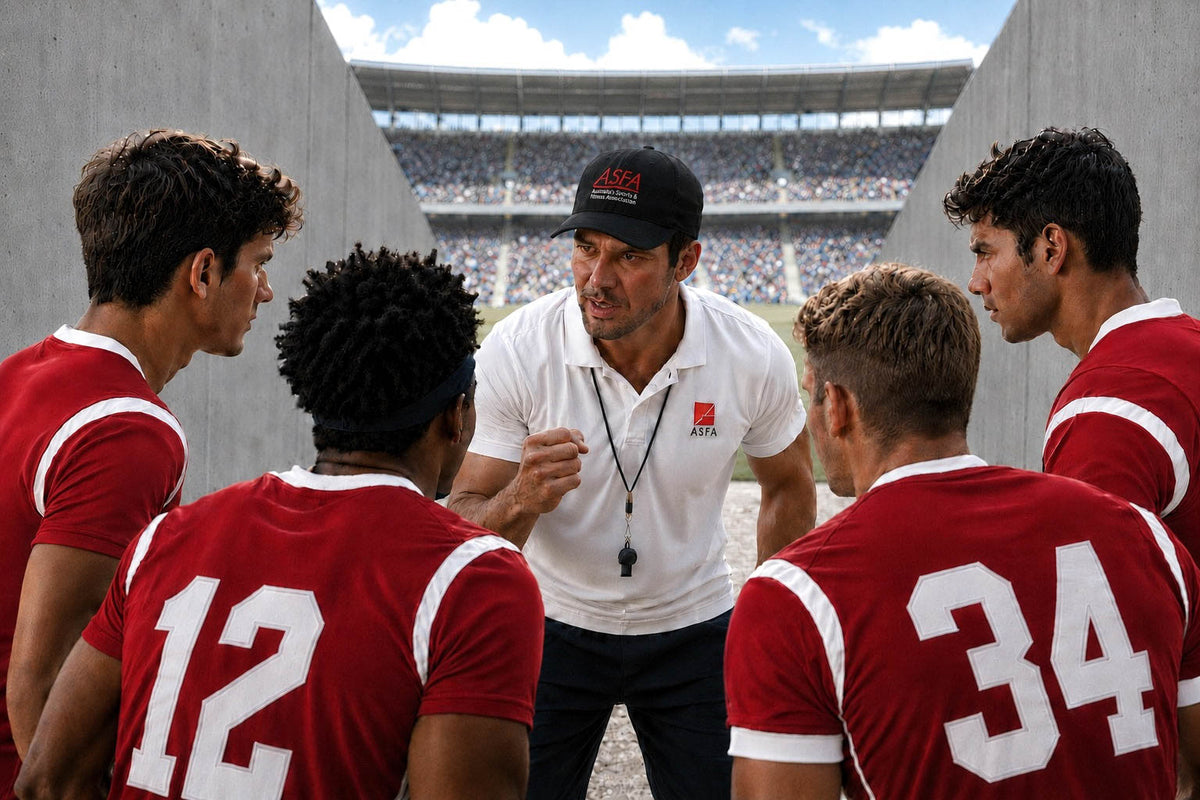
About Our Advanced Sport Psychology Coach Certification
Pressure Does Not Create the Whole Performance. It Reveals the Preparation.
At an advanced level, mental performance coaching moves beyond generic encouragement. The athlete may already know how to set a goal, visualize success, or use positive self-talk. The harder work is understanding when those tools help, when they become forced, and how they fit into the athlete's training environment.
ASFA's Advanced Sport Psychology Coach Certification recognizes a deeper command of motivation, attention, confidence, emotional regulation, performance routines, communication, and adaptation under pressure. It is intended for candidates who have already built a strong foundation through coaching, sport, study, or professional practice.
The examination is available before purchase. Pass first, then decide whether to buy the certification. If you do not pass, you are not charged and can return after further preparation.
What Is an Advanced Sport Psychology Coach Certification?
An Advanced Sport Psychology Coach Certification is a professional credential that validates higher-level knowledge of non-clinical mental performance coaching. It addresses how attention, arousal, confidence, motivation, self-regulation, feedback, team culture, and recovery from setbacks interact across training and competition.
Advanced does not mean a larger collection of motivational phrases. It means being able to select an approach based on the person, the performance demand, and the context. A strategy that helps one athlete may distract another. A routine that works in practice may fail under competition pressure unless it has been trained deliberately.
From Motivation to Self-Regulation
Early coaching often focuses on helping an athlete become motivated. Advanced coaching pays more attention to what happens when motivation is low, confidence is unstable, or the athlete must perform despite discomfort and uncertainty.
That shift matters because serious performers cannot depend on feeling inspired every day. They need routines, decision rules, recovery skills, and a clear relationship with effort. The coach's role is not to manufacture emotion. It is to help the athlete build repeatable behaviors that remain useful when emotion changes.
Self-regulation is central. Athletes must learn to notice their state, interpret it accurately, and respond without making every feeling a command.
Advanced Mental Performance Knowledge
- Attentional control: identifying relevant cues, shifting attention deliberately, and reducing the cost of distraction.
- Arousal and activation: understanding that ideal intensity varies by athlete, task, and competitive setting.
- Confidence under uncertainty: building confidence from preparation, evidence, and controllable behaviors rather than guarantees.
- Performance routines: designing pre-performance, in-performance, and post-performance routines that support consistency.
- Imagery and rehearsal: using mental practice with enough detail, purpose, and repetition to support execution.
- Communication under pressure: adjusting feedback, timing, and tone when an athlete is overloaded, frustrated, or emotionally reactive.
- Setback response: separating honest performance review from rumination, identity-based judgment, and avoidance.
- Team and coaching climate: recognizing how expectations, role clarity, leadership, and interpersonal behavior affect performance.
- Long-term development: supporting sustainable motivation and identity beyond one event, season, or result.
- Scope and referral: distinguishing performance coaching from clinical assessment and treatment.
The examination expects candidates to connect these concepts. Mental performance is not a stack of independent techniques. It is a system of preparation, interpretation, behavior, and review.
The Coach Must Read the Situation
Advanced coaching requires restraint. More intervention is not always better. An athlete may need a cue, a question, a reset routine, or simply time to execute without more input. The wrong message at the wrong time can create more noise.
Good mental performance coaches do not try to become the athlete's inner voice. They help the athlete develop one that is accurate, useful, and resilient.
They also know that pressure is not always the problem. Poor preparation, unclear roles, unrealistic goals, fatigue, conflict, or technical limitations may be driving the response. Mental strategies should not be used to hide a problem that belongs elsewhere in the performance plan.
Advanced Does Not Mean Clinical
This certification does not qualify a coach to diagnose or treat a mental health condition. Advanced knowledge of sport psychology remains different from licensure as a psychologist, counselor, therapist, or other mental health professional.
A coach may work with performance habits, routines, non-clinical stress responses, communication, motivation, and attention. When an athlete presents concerns involving trauma, disordered eating, self-harm, severe anxiety, depression, substance misuse, or another issue beyond coaching scope, referral is required.
Who Should Attempt the Advanced Examination?
The certification can suit experienced coaches, personal trainers, strength professionals, endurance coaches, team leaders, and knowledgeable athletes who have studied mental performance in depth. ASFA does not require the standard Sport Psychology Coach Certification first.
Select the examination that matches your current knowledge. A job title is not proof of preparedness, and a lack of job title does not prove the opposite. The test provides the evidence.
A Direct Test of What You Already Know
Many advanced candidates have already paid for education, attended clinics, read extensively, coached athletes, and learned through competition. Requiring them to repurchase introductory material would add cost without necessarily adding value.
ASFA lets you see the examination first. There are no mandatory classes. Optional resources are available if you want them. If you pass, you may purchase the credential. If you do not, no payment is due.
This approach respects independent learning without pretending that every candidate is ready. The exam answers that question.
Professional Use and Credibility
Advanced sport psychology knowledge can strengthen work in athletic development, strength and conditioning, endurance coaching, tactical preparation, physique coaching, youth sport, and performance-focused personal training. It can also help experienced professionals describe a more defined mental performance service.
The credential does not confer a clinical license and does not guarantee employment, clients, team access, or higher fees. Employers, schools, teams, governing bodies, and insurers may impose separate standards. Verify them directly.
Accreditation and Certification Maintenance
ASFA is fully accredited by the International Council for Online Educational Standards (ICOES). The examination is online and self-paced. After you pass and complete checkout, your digital certificate is normally emailed within minutes.
The one-year option requires retesting and repurchasing before expiration. The lifetime option requires continued activity in the certified field and one relevant continuing-education class, course, or seminar each year.
Advanced Sport Psychology Questions
How is the advanced certification different from the standard certification?
The advanced examination goes deeper into attentional control, arousal, performance routines, self-regulation, communication under pressure, team climate. The interaction among mental performance factors.
Do I need the standard Sport Psychology Coach Certification first?
No. ASFA does not require a prior certification. Choose the level that reflects your current preparation.
Can I call myself a sport psychologist after passing?
No. The credential is for non-clinical sport psychology coaching. Protected professional titles and clinical services require the education, licensure, and authority established by the relevant jurisdiction.
Can a knowledgeable athlete take the advanced examination?
Yes. Knowledge may come from formal education, coaching, competition, independent study, or professional practice. The examination determines whether that knowledge meets the advanced standard.
Is ASFA fully accredited?
Yes. ASFA is fully accredited by the International Council for Online Educational Standards (ICOES).
Do I have to complete coursework?
No. Study resources are optional. Candidates who are prepared may proceed directly to the examination.
What happens after an unsuccessful attempt?
You are not charged. Continue preparing and take the examination again when you are ready.
Will an employer or team accept the certification?
Requirements differ by role, organization, governing body, insurer, and location. Confirm the specific standard before purchasing when acceptance is tied to an opportunity.
Pair Mental Performance With the Work You Already Do
Related ASFA credentials include the Sport Psychology Coach Certification, Advanced Strength & Conditioning Coach Certification, Sport Specific Trainer Certification, Advanced Sports Nutrition Coach Certification, and Tactical Fitness Trainer Certification.
A credible specialty portfolio should make your professional focus clearer, not merely longer.