
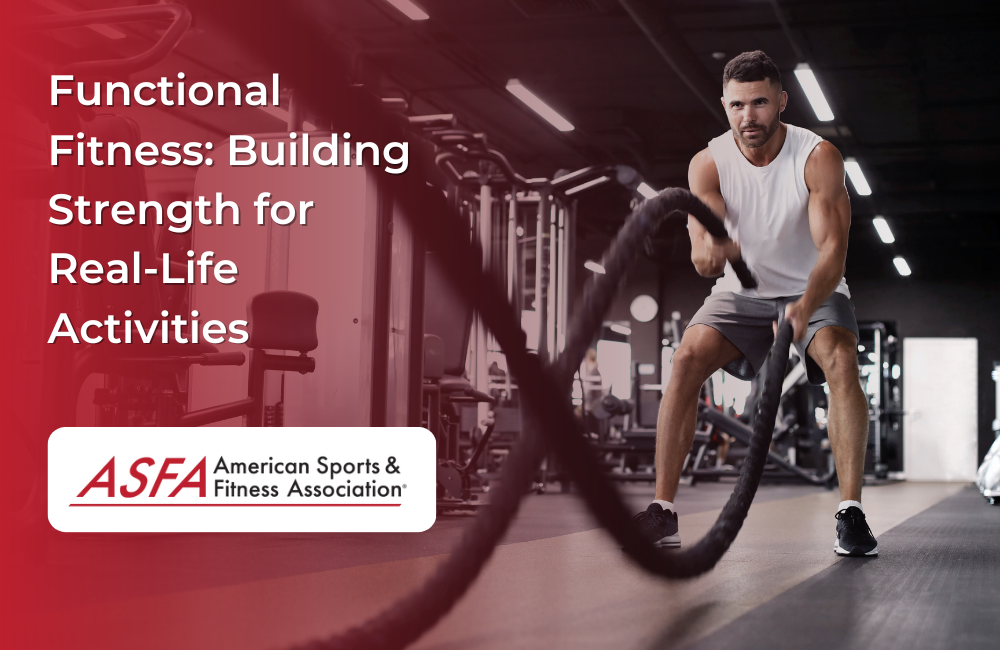
Functional Fitness: Building Strength for Real-Life Activities
There is more to Functional Fitness: Building Strength for Real-Life Activities than one rule. Context determines which details deserve attention.
Fitness advice becomes useful when it can be applied consistently. The best option is usually the one that fits the goal, equipment, experience, and recovery available. There is room for individual preference, provided the basic constraints are respected.
How to Apply It
Keep in mind: Use a starting workload that can be repeated with consistent technique. The most useful progression is often modest: an extra repetition, a small load increase, or slightly more total work.
When to Modify or Stop
Exercise should be adjusted for the participant's experience, symptoms, environment, and available supervision. Stop for sharp pain, dizziness, chest discomfort, sudden weakness, or loss of control, and seek appropriate professional guidance when symptoms are persistent or concerning.
Principles of Functional Fitness
Functional fitness is guided by several core principles:
- Functional Movements: Exercises are designed to replicate natural, everyday movements like squatting, lifting, pushing, pulling, and twisting.
- Multi-Joint Exercises: Functional fitness emphasizes compound exercises that involve multiple joints and muscle groups working together.
- Balance and Stability: Balance and stability training are essential components to improve coordination and prevent falls.
- Core Strength: A strong core is central to functional fitness, as it stabilizes the spine and supports various movements.
- Flexibility and Mobility: Maintaining good range of motion and joint flexibility is important for functional fitness to prevent stiffness and injury.
Benefits of Functional Fitness
- Improved Everyday Functionality: Functional fitness enhances your ability to perform daily activities, such as carrying groceries, lifting children, or getting in and out of a car.
- Enhanced Balance and Coordination: Functional fitness exercises challenge your balance and coordination, reducing the risk of falls and injuries, especially in older adults.
- Functional Strength: This type of training builds practical strength that translates into real-life tasks.
- Injury Prevention: Functional fitness helps identify and correct muscle imbalances and weaknesses, reducing the risk of injury.
- Efficient Workouts: Functional exercises often involve multiple muscle groups, making workouts time-efficient.
- Increased Core Stability: Core strength gained from functional fitness is useful for overall stability and posture.
Examples of Functional Fitness Exercises
- Squats: Mimicking the motion of sitting and standing, squats strengthen the lower body and improve functional leg strength.
- Deadlifts: This exercise replicates the action of picking up objects from the ground, working the back, hips, and legs.
- Push-Ups: Strengthening the chest, shoulders, and triceps, push-ups are an excellent upper body functional exercise.
- Planks: Planks target the core, enhancing stability and posture.
- Lunges: Lunges improve balance and strengthen the legs, mimicking movements like climbing stairs.
- Farmer's Walk: Carrying weights in each hand as you walk enhances grip strength and simulates carrying groceries.
Incorporating Functional Fitness into Your Routine
To include functional fitness in your workout routine, consider the following tips:
- Start Slowly: Begin with exercises appropriate for your fitness level, focusing on proper form and technique.
- Consult a Trainer: If you're new to functional fitness, consider working with a certified trainer who can create a personalized program and ensure correct form.
- Vary Your Routine: Incorporate a variety of functional exercises to target different muscle groups and movements.
- Progress Gradually: As you become more comfortable with functional exercises, gradually increase the intensity and complexity of your workouts.
- Listen to Your Body: Pay attention to your body's signals and avoid overexertion or pushing through pain.
- Combine with Cardio: Include cardiovascular exercise in your routine to improve overall fitness.
Next-Step Perspective
Good coaching leaves room for feedback. If the response does not match the goal, adjust the dose, range, exercise, or expectation.
A More Useful Standard
With Functional Fitness: Building Strength for Real-Life Activities, the same recommendation can produce different results for two people. Experience, recent workload, movement skill, available equipment, schedule, preferences, and recovery all change what is reasonable.
Review the result over several exposures rather than judging one unusually good or difficult session. Useful progress is usually visible as better control, a more appropriate workload, improved consistency, or clearer decision-making.
Turn the Information Into a Decision
The guidance in Functional Fitness: Building Strength for Real-Life Activities becomes more reliable when assumptions are made visible and the plan can be adjusted from feedback.
Distinguish what is known, what is being assumed, and what still needs to be tested. This keeps the guidance flexible and prevents a general principle from being treated as a universal rule. The result should be a plan that can respond to actual feedback.
Create a Useful Feedback Loop
A short record is usually enough. Review:
- constraints or side effects that make the plan harder to sustain
- the starting point and the exact change made
- a result connected to the stated objective
- consistency across several normal attempts
Use the record to make a decision: continue, progress, simplify, or replace the current approach. Data that never changes a decision is unnecessary.
Why the Same Advice Produces Different Results
Experience, resources, schedule, environment, preferences, and competing priorities can all change the best application. Use the principle as a starting point and adjust the method. A recommendation is more useful when it acknowledges the conditions required for it to work.
Where Good Information Can Go Wrong
- Adding complexity before the basic action is consistent.
- Treating a general guideline as a universal rule.
- Changing several variables and then assigning credit to one of them.
- Measuring what is easy rather than what is connected to the goal.
A clear plan does not remove uncertainty, but it makes the next adjustment more responsible and easier to explain.
A Practical Review Checklist
- What outcome matters most?
- Which assumptions are being made?
- What action can be repeated under normal conditions?
- What evidence will be reviewed?
- When will the plan be reassessed?
- What is the simplest useful adjustment?
This review keeps the next step tied to the topic while leaving room for individual judgment and feedback.
Adjust One Variable at a Time
Time, equipment, experience, environment, frequency, competing priorities, and recovery can all change the value of a recommendation.
- Revise the plan when the outcome does not match the objective.
- State the assumptions behind the plan.
- Choose a version that can be repeated consistently.
- Track the result that matters instead of collecting unnecessary data.
Progress From Repeatable Success
Progress should be connected to the original objective. More time, more difficulty, or more complexity is useful only when it improves the outcome that matters. Keep the parts of the plan that are working, revise the limiting factor, and avoid replacing the entire approach without evidence.
A Simple Implementation Check
- When will the plan be reassessed?
- What is the simplest useful adjustment?
- What outcome matters most?
- Which assumptions are being made?
- What action can be repeated under normal conditions?
If those questions have clear answers, the guidance is more likely to produce a plan that can be followed and evaluated.


